
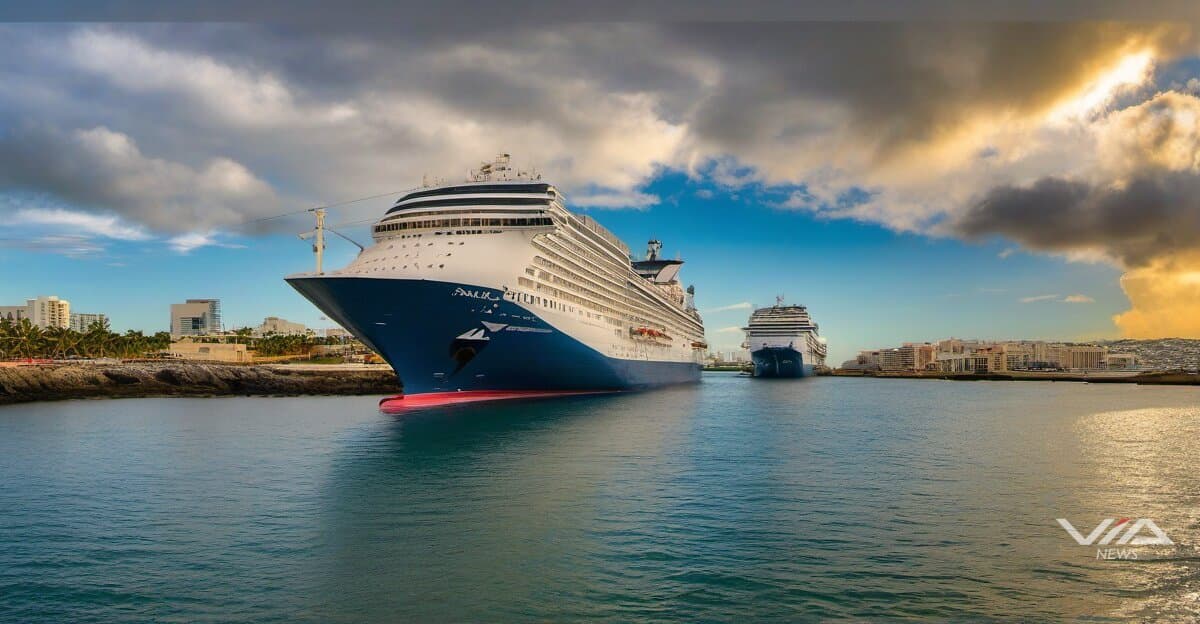
Norwegian Cruise Line Holdings (NCLH) is raising the stakes in the Caribbean with a deployment decision that has no precedent in the company's six-decade history: for the winter 2027/28 season, both Norwegian Prima and Norwegian Viva — the flagship vessels of NCL's newest and most premium Prima Class — will homeport simultaneously in San Juan, Puerto Rico.
The move is more than a scheduling footnote. It is a capital-allocation signal, a competitive statement, and a direct reflection of where NCL's management sees the strongest revenue-per-passenger opportunity in its global network.
Why San Juan, Why Now
San Juan has long been one of the Caribbean's premier homeport destinations, offering direct access to the Eastern and Southern Caribbean without the transit day costs associated with Florida-based embarkations. For premium cruise lines, that geography translates into longer itineraries, more port calls, and — critically — higher per-diem passenger spending.
By concentrating two Prima-class ships in Puerto Rico, NCL is effectively doubling the berth capacity it can deploy from the island while maintaining the brand consistency of its highest-tier hardware. The Prima Class ships, each carrying approximately 3,215 guests at double occupancy, represent NCL's most significant product investment in years, featuring expanded suite categories, proprietary restaurant concepts, and onboard amenities designed to attract higher-spending demographics.
Combined, the two vessels could generate roughly 6,430 double-occupancy berths sailing from San Juan each week of the winter season — a substantial inventory commitment that underscores management's conviction in Caribbean demand holding firm through late 2027 and into 2028.
Revenue and Margin Implications
For NCLH investors, the deployment carries meaningful financial implications. Prima-class itineraries out of San Juan typically command higher net ticket revenue than equivalent sailings from major Florida ports, partly because of itinerary length and partly because the San Juan homeport skews toward fly-cruise passengers — a segment historically associated with stronger onboard spending and advance booking rates.
Onboard revenue — spanning specialty dining, beverage packages, shore excursions, and casino activity — has become an increasingly important margin driver for NCL in the post-pandemic operating environment. Concentrating premium hardware in a high-yield market is a textbook lever for improving net yield per passenger cruise day (PCD), the metric analysts watch most closely when assessing cruise line profitability.
Competitive Context
The decision also carries a competitive dimension. Royal Caribbean and Carnival Corporation have both been aggressive in expanding Caribbean capacity in recent seasons. NCL's dual-Prima deployment in San Juan is a direct counter-move, staking out differentiated positioning on product quality rather than sheer volume — a strategy consistent with the company's broader effort to premiumize its brand and reduce its exposure to deeply discounted mass-market fares.
Investor Takeaway
For those with positions in NCLH or evaluating entry points, this announcement is a constructive data point. It reflects management's forward demand visibility, willingness to commit premium assets to a specific market, and confidence that the structural recovery in cruise travel — now well into its post-pandemic normalization — has durable legs through the back half of the decade. The Caribbean remains the world's largest cruise market by passenger volume, and NCL is clearly positioning to capture a disproportionate share of its premium tier.
NCLH shares are listed on the New York Stock Exchange. Investors should conduct their own due diligence before making investment decisions.