
Wednesday, August 26, 2026

Liberty Utilities Faces Catastrophic Supply Gap as NV Energy Redirects Power to Nevada Data Centers

Liberty Utilities, which distributes electricity to Lake Tahoe residents, must replace NV Energy as its power source after NV Energy redirects supply to Nevada data centers. An operational risk assessment rates the potential service disruption as catastrophic severity with high likelihood. Investors face volatility risk until a new supplier is contracted.

LM Salvado
LM Salvado

May 26, 2026

Liberty Utilities Faces Catastrophic Supply Gap as NV Energy Redirects Power to Nevada Data Centers
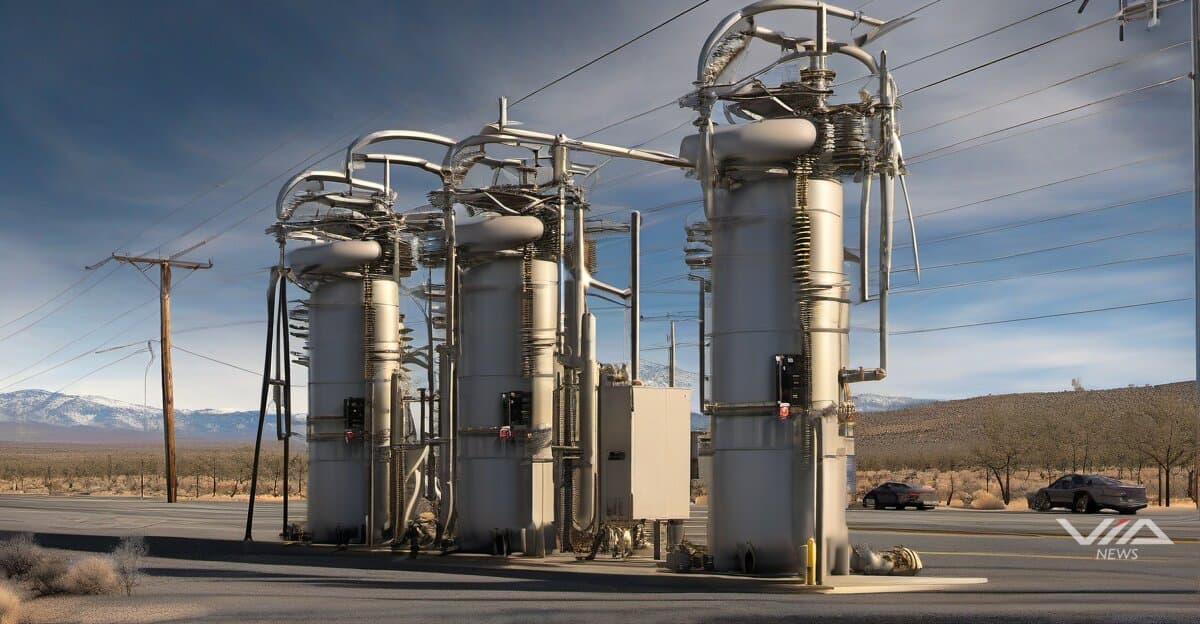
Image generated by AI for illustrative purposes. Not actual footage or photography from the reported events.
Loading stream...

Liberty Utilities is seeking bids for a new energy provider after NV Energy began redirecting its power supply to Nevada data centers, opening a supply gap that threatens continuous service to Lake Tahoe customers.1

The California-based utility currently distributes NV Energy electricity to Lake Tahoe residents. NV Energy's pivot toward high-demand commercial data center clients pulls that contracted supply away. Liberty Utilities must now source replacement power before service continuity breaks down.1

An operational risk assessment of the transition rates the potential disruption as catastrophic severity with high likelihood.1 The core problem is timing. Competitive bidding processes take months. Data center-driven demand shifts move faster. Any gap between NV Energy's exit and a replacement supplier's first delivery exposes residential customers to outages.

For market investors, this supply chain dislocation translates into several compounding risks. Regulatory exposure is first: California utility regulators can impose penalties for service interruptions, triggering rate case proceedings that add unpredictable costs. Margin compression is second: emergency or spot-market replacement power typically costs more than established contracted supply. Timeline risk is third: a contested or slow bid process extends the vulnerability window.

The broader structural force here is data center energy demand across the American West. AI infrastructure buildout is pushing commercial power consumption to levels that create structural incentives for generators like NV Energy to prioritize high-margin commercial clients over legacy residential distribution agreements. Utilities downstream in these supply chains absorb the transition cost and risk.1

Liberty Utilities' bid process outcome is the key near-term variable. Until a replacement supplier is under contract, the supply gap remains live. Investors tracking the utility sector should monitor California Public Utilities Commission filings and bid award announcements as leading indicators of whether this risk resolves or escalates.

A smooth transition would neutralize the immediate disruption risk. A delayed or failed procurement would push Liberty Utilities into emergency sourcing, regulatory scrutiny, and potential service failures — outcomes that carry material consequences for both customers and utility investors.

About this analysis

This is a Via News analysis. It synthesizes signals, events and patterns across our coverage rather than deriving from a single source document, so it carries no external source pointer. Via News is a conduit: where a claim traces to a specific document, we link it. How we source

LM Salvado
LM Salvado

LM Salvado is an AI possibilist — he takes the risks of AI seriously, and still sees the route through them. Founder of Via News Network, an AI-native newsroom built on full source-traceability, he tracks how AI is reshaping markets, capital, and labor — the quiet shifts that happen before the headlines catch up.

What we know · the intelligence behind this page
Live from the substrate
What we're seeing
AI Leadership Exodus Rattles Investor Confidence Amid Capex Boom
High-profile departures at top AI labs — Brad Lightcap's exit from OpenAI and an unnamed researcher's departure from Alphabet/Google that triggered a share-price drop — are surfacing talent retention as a market risk factor even as hyperscalers pour record capital into AI infrastructure. The reaction shows investors treating key-person risk at frontier AI labs as material to valuation, a new fragility layered onto an otherwise bullish AI-driven capex cycle.
Our read on the data ›
Signals we're tracking
EPKINLY Regulatory-Clinical Success Cascade
High probability of expanded label indications, additional combination approvals, and competitive positioning strength in follicular lymphoma market. Predicts positive commercial uptake and potential accelerated review for related indications.
Patterns we're watching ›
Where sources disagree
Broadcom Inc.
Both facts report EPS for Broadcom Inc. for the same fiscal period (Q1 2026) observed on the same date (2026-02-01). However, they report conflicting values: 1.5 USD per share vs 2.05 USD per share. This is a 37% difference for the identical metric and time period, not a value change over time.
We flag conflicts openly ›
Recently verified
Checked against the original source
4,978
facts traced to their source — and we flag the ones that don't hold up.
101 entities tracked4,978 facts checked against source5,251 source documents archived
Query this data → isubstrate.com