
Wednesday, August 26, 2026

Waller Rules Out Nothing: Fed Hike Risk Returns as Iran War Stalls Disinflation

Fed Governor Christopher Waller declared May 22 that rate hikes can no longer be ruled out, reversing the hold consensus after Iran War-driven inflation stalled disinflation progress. Markets repriced rate expectations immediately following his Frankfurt remarks. The shift compounds an already volatile Fed backdrop: an 8-4 FOMC split, a Trump-Powell conflict, and incoming chair Kevin Warsh walking into what insiders call a 'family fight.'

LM Salvado
LM Salvado

May 26, 2026

Waller Rules Out Nothing: Fed Hike Risk Returns as Iran War Stalls Disinflation
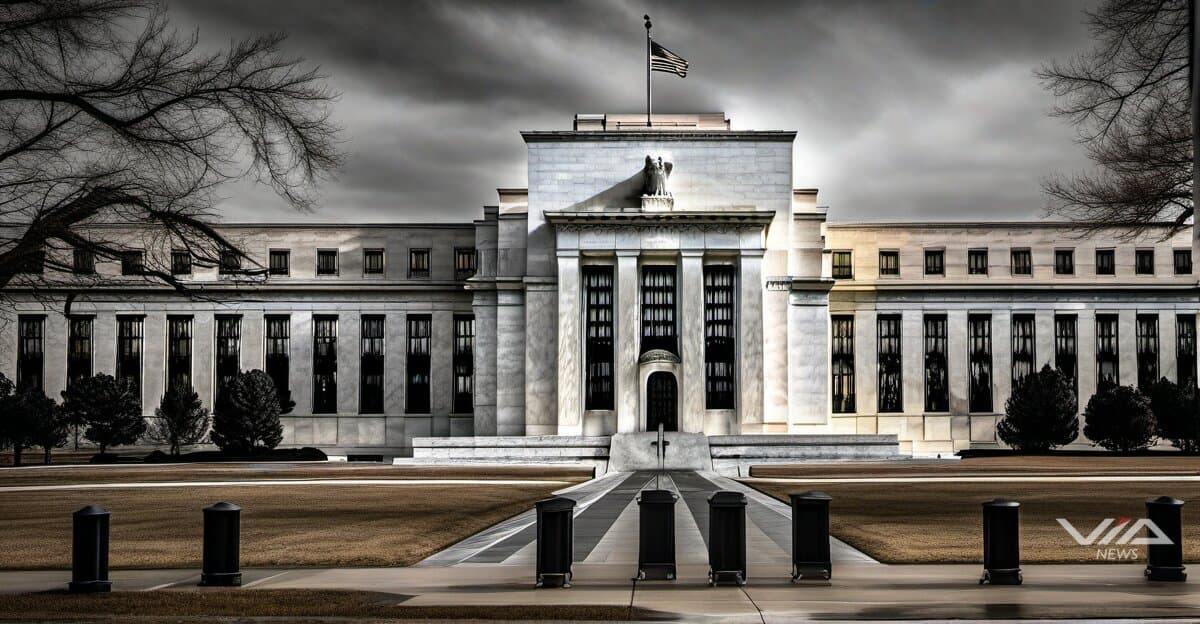
Image generated by AI for illustrative purposes. Not actual footage or photography from the reported events.
Loading stream...

Fed Governor Christopher Waller put rate hikes back on the table May 22, ending the market's assumption that the next move is a cut.1 Speaking in Frankfurt, Waller delivered the sharpest hawkish signal from a sitting Fed official in months.

"Inflation is not headed in the right direction," Waller said.1 "I can no longer rule out rate hikes further down the road if inflation does not abate soon."1

The cause: supply-shock inflation from the Iran War, which began in February 2026. Oil price disruptions have arrested the disinflation trajectory the Fed expected to continue through mid-year.1

Waller's base case remains a hold — wait and watch until the war's inflationary impact becomes clearer.1 But he flagged that duration matters. High oil prices could dissipate quickly if the conflict is short.1 A prolonged war would force longer-term monetary tightening.1

Market Repricing: Equities, Forex, Commodities

Waller's Frankfurt remarks triggered immediate repricing of rate-hike probability across asset classes. The reversal from anticipated cuts to potential hikes reshuffles the calculus in three markets simultaneously.

Equities face multiple compression. Growth stocks, which rallied on the expectation of 2026 rate cuts, are most exposed to a higher-for-longer repricing. Rate-sensitive sectors — utilities, real estate, long-duration tech — carry the most downside if hikes materialize.

Forex markets are reacting to renewed dollar strength signals. Rate-hike expectations typically draw capital into dollar assets, pressuring emerging market currencies and compressing commodity-linked currencies that had benefited from the prior dovish outlook.

Commodities present a structural contradiction: oil remains elevated due to the Iran conflict — the same dynamic driving the inflation the Fed must now fight. Gold faces dollar headwinds from the hawkish pivot, even as inflation-hedge demand persists.

Institutional Turbulence Adds Policy Risk

The FOMC's recent vote was 8-4 with three dissents — unusually fractious for a body that relies on consensus signaling.2 Kevin Warsh has replaced Jerome Powell as Fed chair following a Trump-Justice Department confrontation with Powell.2

Warsh enters leading what insiders describe as a "family fight" over the rate path.2 The internal divisions create a separate layer of uncertainty: markets must now price not just the macro outcome, but the Fed's ability to deliver a coherent policy signal at all.

Waller's hike warning, an 8-4 split, and a new chair inheriting a divided institution: the Federal Reserve's policy trajectory is the least legible it has been in years. For traders, that ambiguity itself is the position.

Source documents

Via News is a conduit. We point to the source documents behind this report — we don't replace them. Trace any claim to its source and decide what to trust. How we source

Source Trace Score2 source documents2 with a live linkVerifiability: Strong
  1. [1]News articleYahoo Finance· May 23, 2026
    Another top Fed official resets rate-cut bets
  2. [2]News articleCNBC· May 16, 2026
    Kevin Warsh comes into the Fed facing a big 'family fight' over cutting interest rates

In this story · Knowledge Files

LM Salvado
LM Salvado

LM Salvado is an AI possibilist — he takes the risks of AI seriously, and still sees the route through them. Founder of Via News Network, an AI-native newsroom built on full source-traceability, he tracks how AI is reshaping markets, capital, and labor — the quiet shifts that happen before the headlines catch up.

What we know · the intelligence behind this page
Live from the substrate
What we're seeing
AI Leadership Exodus Rattles Investor Confidence Amid Capex Boom
High-profile departures at top AI labs — Brad Lightcap's exit from OpenAI and an unnamed researcher's departure from Alphabet/Google that triggered a share-price drop — are surfacing talent retention as a market risk factor even as hyperscalers pour record capital into AI infrastructure. The reaction shows investors treating key-person risk at frontier AI labs as material to valuation, a new fragility layered onto an otherwise bullish AI-driven capex cycle.
Our read on the data ›
Signals we're tracking
EPKINLY Regulatory-Clinical Success Cascade
High probability of expanded label indications, additional combination approvals, and competitive positioning strength in follicular lymphoma market. Predicts positive commercial uptake and potential accelerated review for related indications.
Patterns we're watching ›
Where sources disagree
Broadcom Inc.
Both facts report EPS for Broadcom Inc. for the same fiscal period (Q1 2026) observed on the same date (2026-02-01). However, they report conflicting values: 1.5 USD per share vs 2.05 USD per share. This is a 37% difference for the identical metric and time period, not a value change over time.
We flag conflicts openly ›
Recently verified
Checked against the original source
4,978
facts traced to their source — and we flag the ones that don't hold up.
101 entities tracked4,978 facts checked against source5,251 source documents archived
Query this data → isubstrate.com